

Faculty Mentor
Dr. Elaine Vanterpool
Files
Download Full Text (301 KB)
Description
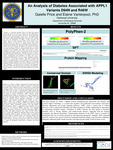
Diabetes is a chronic condition characterized by high blood sugar levels resulting from the body's inability to produce or effectively use insulin. Type 2 diabetes, the most common form, is often linked to insulin resistance, where cells do not respond properly to insulin. The APPL1 gene encodes a multifunctional adaptor protein that plays a key role in insulin and adiponectin signaling, both of which are crucial for glucose metabolism. APPL1 enhances insulin stimulated glucose uptake by activating Akt, a major component in the insulin signaling pathway. Deficiencies in APPL1 have been linked to impaired insulin signaling, contributing to insulin resistance and metabolic dysfunction, key features of type 2 diabetes. APPL1 also influences adiponectin signaling, which enhances insulin sensitivity. Reduced APPL1 expression can disrupt this process, further exacerbating metabolic issues like diabetes. Beyond diabetes, APPL1 is implicated in other conditions such as renal clear cell carcinoma (KIRC), polycystic ovary syndrome (PCOS), and gastric carcinoma. Its reduced expression in KIRC is associated with higher metastasis rates, while in PCOS, APPL1's role in insulin and adiponectin signaling affects ovarian function and metabolic balance. In gastric carcinoma, APPL1 overexpression has been linked to enhanced tumor cell migration through Akt2 phosphorylation. Given its broad role in metabolic regulation, insulin resistance, and disease progression, APPL1 shows promise as a target for therapeutic interventions in diabetes and related disorders.
Publication Date
4-1-2025
City
Huntsville
Disciplines
Biology
Recommended Citation
Vanterpool, Elaine and Price, Gaielle, "An Analysis of Diabetes Associated with APPL1 Variants D94N and R46W" (2025). Student Posters. 167.
https://ouscholars.oakwood.edu/student-posters/167
Comments
Gaielle Price, Student Researcher