

Faculty Mentor
Dr. Elaine Vanterpool
Files
Download Full Text (828 KB)
Description
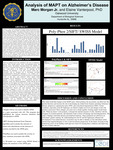
There are multiple factors that contribute to the onset of Alzheimer’s disease. These include genetic causes, environmental factors, and lifestyle choices. Microtubule-Associated Protein Tau. (MAPT) is a gene that is associated with the onset of Alzheimer’s disease. There are 2 main alleles of the APOE gene: H1 haplotype and H2 haplotype. H1 haplotype is the more common variant and is associated with an increased risk of developing tau-related neurodegenerative diseases.H2 haplotype is less common and is thought to have originated from an ancient inversion on chromosome 17q21. It may have some protective effects against certain tauopathies. The H1 haplotype is the most common, found in the majority of human populations. It is particularly prevalent in European, Asian, and African populations. Along with this the H1 haplotype has the highest risk factor for the onset of Alzheimer’s disease. If an individual has both copies of the H1 haplotype (H1/H1 genotype), they may be at a higher risk of developing tau-related neurodegenerative diseases and could experience faster disease progression compared to those who carry the protective H2 haplotype. This condition is known for progressive memory loss due to the death of neurons and a decline in brain health. This study is to gain insight into the effect that variants of the APOE gene have on the onset of Alzheimer’s disease. The MAPT gene is involved in the formation of neurofibrillary tangles (NFTs), which are a hallmark of tauopathies such as Alzheimer’s disease (AD), progressive supranuclear palsy (PSP), and corticobasal degeneration (CBD)
Publication Date
4-1-2025
City
Huntsville
Disciplines
Biology
Recommended Citation
Vanterpool, Elaine, "Analysis of MAPT on Alzheimer’s Disease" (2025). Student Posters. 130.
https://ouscholars.oakwood.edu/student-posters/130
Comments
Marc Morgan, Student Researcher