

Faculty Mentor
Dr. Elaine Vanterpool
Files
Download Full Text (758 KB)
Description
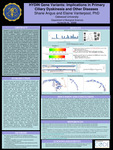
The HYDIN gene, also known as CILD5, HYDIN1, HYDIN2, and PPP1R31, encodes a protein that plays a role in cilia motility. Mutations in HYDIN are associated with autosomal recessive primary ciliary dyskinesia-5 (PCD5), a disorder characterized by cerebrospinal fluid accumulation in the brain’s ventricles. A duplicate copy of this gene has also been identified on chromosome 1 in humans. Research indicates that HYDIN loss of-function mutations contribute to asthenoteratozoospermia, leading to structural defects in sperm flagella, disassembly of the acrosome and neck, and subsequent male infertility. Intracytoplasmic sperm injection (ICSI) has been proposed as a potential treatment for sperm immobility caused by these mutations. Beyond its role in ciliary function, HYDIN has been implicated in other diseases. Single nucleotide polymorphisms (SNPs) in HYDIN have been linked to atrial septal defects (ASD), a common congenital heart condition. Additionally, emerging studies suggest that HYDIN variants may serve as cancer associated antigens recognized by adaptive immunity, indicating a potential role in oncogenesis. Structurally, the HYDIN protein contains conserved domains critical for cellular function. The ASH domain, present in proteins involved in cilia, flagella, the centrosome, and the Golgi complex, is also found in HYDIN and OCRL—deficiencies of which are associated with hydrocephalus and Lowe oculocerebrorenal syndrome (OCRL), respectively. This suggests that HYDIN may have functions beyond mitotic spindle regulation, potentially influencing ciliary and flagellar dynamics. Another key domain, the Trichohyalin-Plectin Homology (TPH) domain, is linked to mitochondrial movement and cytoskeletal interactions, further highlighting HYDIN’s significance in cellular processes and disease pathology.
Publication Date
4-1-2025
City
Huntsville
Disciplines
Biology
Recommended Citation
Vanterpool, Elaine and Angus, Sharie, "HYDIN Gene Variants: Implications in Primary Ciliary Dyskinesia and Other Diseases" (2025). Student Posters. 133.
https://ouscholars.oakwood.edu/student-posters/133
Comments
Sharie Angus, Student Researcher