

Faculty Mentor
Dr. Elaine Vanterpool
Files
Download Full Text (1.2 MB)
Description
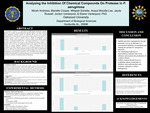
Pseudomonas aeruginosa is a gram-negative, bacillus-shaped opportunistic pathogen, notorious for invading immunocompromised individual leading to secondary infections. These opportunistic microbes typically are implicated mild to more severe infections including burn or wound infections to more serious systemic infections. The bacterium Ps. aeruginosa utilizes a variety of virulence factors to enhance the pathogenicity of the organism. Virulence factors secreted by Ps. aeruginosa include its pili, adhesins, capsule, exotoxin A, and lipopolysaccharide (LPS). The proteases produced by Ps. aeruginosa are powerful virulence factors that can lead to tissue destruction and immune invasion. It is imperative that we find ways of regulating the proteases of this organism. This study aims to evaluate the protease inhibiting capabilities of vanillin, metronidazole, and silver nanoparticles. EnzChek Collagenase Assay kit was used to quantify proteolytic activity in the presence or absence of the testing compounds. Results show that vanillin can inhibit protease activity by 30% with nanoparticles showing the greatest inhibition up to 98%. In contrast, metronidazole increased proteolytic activities by 157%. The findings of this study support our hypothesis that compounds like vanillin and nanoparticles can act as protease inhibitors. This may lead to a reduction is Pseudomonas-induced complications
Publication Date
4-1-2025
City
Huntsville
Disciplines
Biology
Recommended Citation
Vanterpool, Elaine; Andrews, Micah; Cooper, Marielle; Eshette, Mitspah; Moodie-Lee, Anaya; Russell, Jayda; and Vanterpool, Jordon, "Analyzing the Inhibition Of Chemical Compounds On Protease in P. aeruginosa" (2025). Student Posters. 181.
https://ouscholars.oakwood.edu/student-posters/181
Comments
Student Researchers: Andrews, Cooper, Eshette, Moodie-Lee, Russell, J. Vanterpool.