

Faculty Mentor
Dr. Elaine Vanterpool
Files
Download Full Text (668 KB)
Description
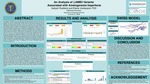
The disease researched in this study was Amelogenesis Imperfecta. Those infected may experience mild to extreme the enamel formation which results in tooth brittleness and discoloration (brown and yellow). Being an X-linked recessive inherited disease, it is more detrimental to males than that of females. Individuals with this disease are also more susceptible to dental caries caused by bacteria such as streptococcal mutans. Overtime, this bacteria can demineralize the teeth by metabolizing sugars that can produce acids. These acids can cause severe unrepairable damage to the tooth. This disease can also result in psychological issues including mental health disorders due to a lack of confidence in the affected individual’s appearance. Though there are no known ways to restore the enamel or restore affected teeth, there are clinical methods utilized to lessen its severity or noticeability. Techniques used to do the aforementioned includes using stainless steel crowns to prevent caries in the enamel or indirect composite resin veneers to mask the discoloration and prevent caries in the enamel while also improving the morphology of the crown. In adults, orthodontic, endodontic, and periodontic surgery can assist in the lengthening of crowns and readjustment of the jaws. While these measures may be helpful, they are mere accommodations and not completely restorative. It is through the furtherance of the knowledge of the LAMB3 Gene and the Amelogenesis Imperfecta disease as a whole that researchers may be able to devise solutions for this inherited disorder.
Publication Date
4-1-2025
City
Huntsville
Disciplines
Biology
Recommended Citation
Vanterpool, Elaine and Ruddock, Aaliyah, "An Analysis of LAMB3 Variants Associated with Amelogenesis Imperfecta" (2025). Student Posters. 154.
https://ouscholars.oakwood.edu/student-posters/154
Comments
Aaliyah Ruddock, Student Researcher