

Faculty Mentor
Dr. Elaine Vanterpool
Files
Download Full Text (914 KB)
Description
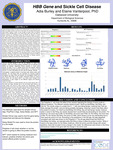
Around 100,000 people in the US are affected by sickle cell disease. There are 8 million people worldwide who are affected by Sickle cell disease. Regarding African ancestry or those who identify as black, 9 of 10 people would have this disease. Black babies can be born with this trait, and the ratio is 1 in every 13, and around 1 in every 365 babies are born with the disease. (NHLBI) •Hemoglobin, a specific protein in red blood cells, affects sickle cell disease. Our red blood cells are important for carrying oxygen throughout our body. When we breathe, the hemoglobin inside our red blood cells binds to the oxygen molecules inside our lungs. From there, the red blood cells in our body travel through our bloodstream to give oxygen to the different organs and tissues inside the body. •Sickle cell disease is a blood disorder that can cause severe pain in the body and organ damage due to the red blood cells being in a sickle shape and trying to pass through the bloodstream. Other problems that could occur from sickle cell anemia include terrible pain, blood blockages, and other health problems. Some tissues that this can affect are our adrenal tissues, heart tissue, intestines, lungs, kidneys, and stomach. It has been shown to affect the heart, lung, and stomach tissue most profoundly out of these tissues. Some complications can include certain things such as chronic pain, lung problems, as well as eye problems, infections, and even kidney diseases (NIH). It can also lead to blood cells being ruptured, anemia, immunodeficiency, and, in some cases, early death. Sickle Cell is a disease that can be very serious and affect many lives. Increasing our awareness and advancing our reach of HBB and its effect on Sickle Cell disease will be crucial for enhancing our understanding in the future
Publication Date
4-1-2025
City
Huntsville
Disciplines
Biology
Recommended Citation
Vanterpool, Elaine and Burley, Adia, "HBB Gene and Sickle Cell Disease" (2025). Student Posters. 165.
https://ouscholars.oakwood.edu/student-posters/165
Comments
Adia Burley, Student Researcher