

Faculty Mentor
Dr. Elaine Vanterpool
Files
Download Full Text (1.4 MB)
Description
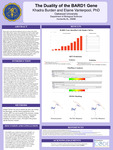
Cancer causes cells to constantly grow and wreak havoc on the body. Cancer is the 2nd leading cause of death in the world and affects over 2 million individuals in the United States. One of the most common cancers in the US is breast cancer. Breast cancer is one of the most diagnosed cancers in women in the US. Breast cancer occurs when the breast cells overproduce, and tumors develop and eventually spread to the rest of the body. There are several factors that increase an individual’s risk of breast cancer such as age, sex, genetics, obesity, family history of the illness, etc. While genetics is responsible for up to 15% of breast cancer cases, most are due to environmental factors. BRCA-1 and BRCA-2 are two of the most well-known genes associated with breast cancer. BARD1 (BRCA1 associated ring domain 1) is a lesser-known gene that is linked to breast cancer. The BARD1 gene has also been linked to lung and ovarian cancers. BARD1 is a part of the RING_HC BARD1 conserved domain family. Research indicates that BARD1 can function as a tumor suppressor or an oncogene. A full length BARD1 gene acts as a tumor suppressor, and a BARD1 gene with different protein sequences has been associated with oncogenesis. A missense variant can cause the BARD1 gene to no longer function as a tumor suppressor. Defective tumor suppressors can lead to cell growth that is not regulated and can result in cancer development.
Publication Date
4-1-2025
City
Huntsville
Disciplines
Biology
Recommended Citation
Vanterpool, Elaine and Burden, Khadra, "The Duality of the BARD1 Gene" (2025). Student Posters. 172.
https://ouscholars.oakwood.edu/student-posters/172
Comments
Khadra Burden, Student Researcher