

Faculty Mentor
Dr. Elaine Vanterpool
Files
Download Full Text (303 KB)
Description
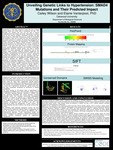
Hypertension, commonly referred to as high blood pressure, is a significant public health concern due to its role in increasing the risk of life-threatening conditions such as heart attack and stroke. Often called the "silent killer," hypertension typically presents without symptoms, leading many individuals to remain unaware of their condition until complications arise. While lifestyle factors play a crucial role in hypertension development, genetic factors have also been increasingly recognized as contributors to disease susceptibility. This study focuses on the genetic basis of hypertension by investigating the SMAD4 gene, which encodes a protein involved in intracellular signaling pathways. Mutations in SMAD4 have been previously associated with various disorders, including pancreatic cancer and hereditary hemorrhagic telangiectasia syndrome. To explore its potential role in hypertension, Simple ClinVar was used to identify two SMAD4 variants—Arg361Cys and Arg380Lys—both of which are single nucleotide missense mutations. Computational tools PolyPhen-2 and SIFT were employed to predict the pathogenicity of these variants, with results indicating that both mutations may disrupt normal protein function. By identifying these potentially pathogenic variants, this study underscores the importance of genetic factors in hypertension and lays the groundwork for future research into SMAD4’s role in cardiovascular regulation. Further experimental studies and clinical investigations are necessary to validate these findings and explore possible therapeutic targets for hypertension management.
Publication Date
4-1-2025
City
Huntsville
Disciplines
Biology
Recommended Citation
Vanterpool, Elaine and Wilson, Cailey, "Unveiling Genetic Links to Hypertension: SMAD4 Mutations and Their Predicted Impact" (2025). Student Posters. 175.
https://ouscholars.oakwood.edu/student-posters/175
Comments
Cailey Wilson, Student Researcher